Have you had a good fishing life?
A fishing reel is mostly metal, and most of that metal is small, precise and hidden. As long as those parts turn smoothly, the reel does its job without you ever thinking about it. The moment salt gets in among them, it stops.
That is the whole problem. Seawater and dried salt are the enemy of everything that moves inside a reel. You take it to the sea every trip, so maintenance is not optional — it is the difference between an expensive reel that stays smooth for a decade and one that turns rough in two seasons. A cheap reel neglected the same way simply dies.
I have come to think that looking after your tackle is part of fishing, not something separate from it.

At the fishing spot: rinse before you drive home
I keep a bottle of fresh water in the car. Before heading home, I rinse the reel with it right there at the spot.
This matters more than it sounds. Salt that dries on the way home has hours to work its way into the seams and start crystallising. A rinse at the car buys you that time back.
At home: wash it properly
The full wash happens in the sink. There are a few rules that make the difference between washing a reel and flooding one.
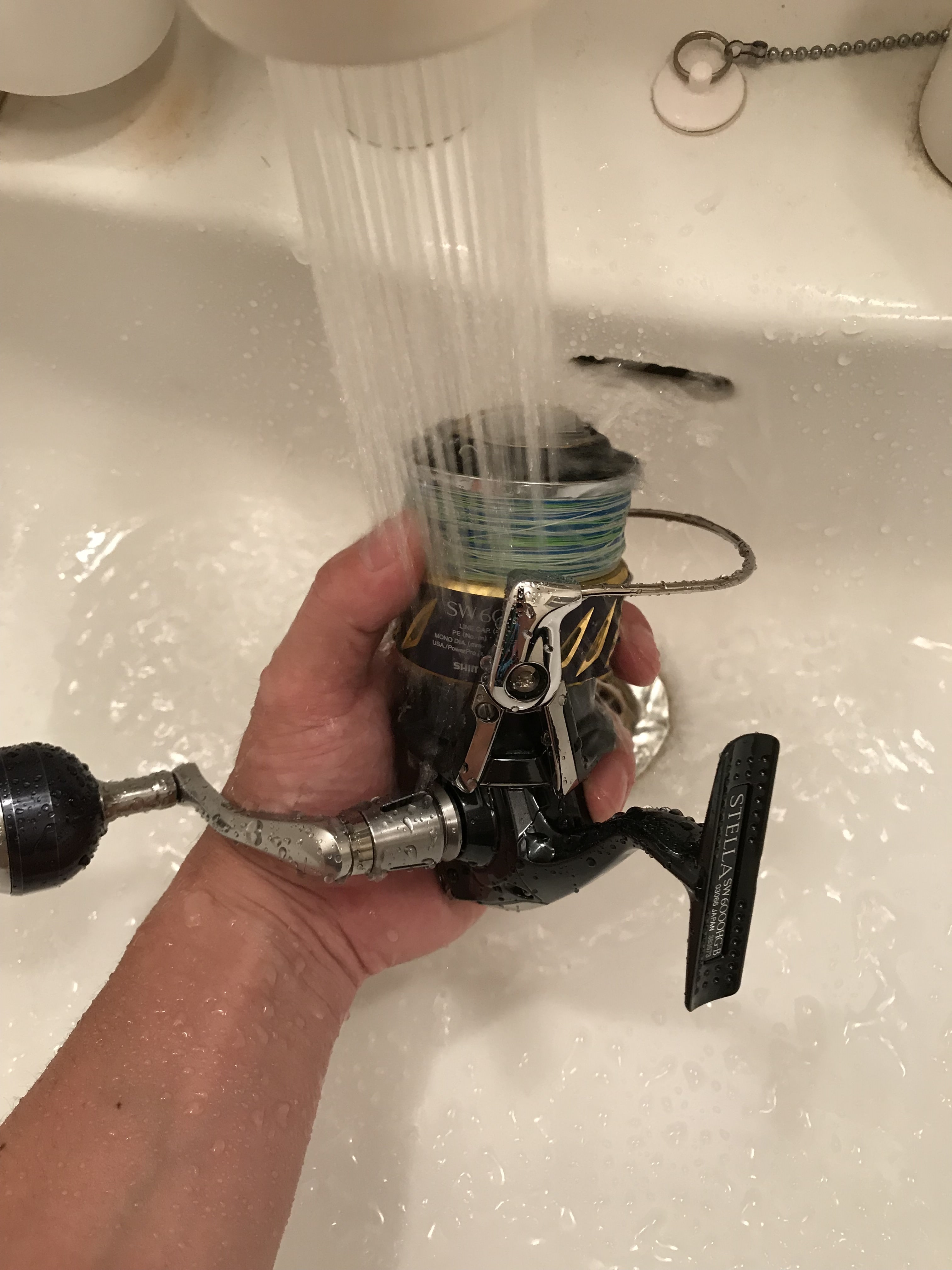
Hold the reel with the spool facing down, which closes up the gap between spool and body.

Now pour water over it from above.
Pour from the drag side, holding the reel so that the drag knob is uppermost.


While the water runs, rub the body gently with your fingers. Pay particular attention to the PE line on the spool and to anything that moves — the handle and the bail arm especially, since salt collects in the joints.
Drying
Shake the reel lightly to throw off the loose water, then dry it with a lint-free cloth. An ordinary towel leaves fibres behind in exactly the places you do not want them.

Once most of the water is off, back the drag off and take the spool out. Dry from the outside inward. Take a look at where grease has been applied while you are in there — that tells you where to lubricate later.
For the inside of the spool and the inside of the drag knob, a cotton bud gets into the recesses a cloth cannot reach.

Then leave it apart for a full day.
somewhere with low humidity
Lay a towel loosely over the top to keep dust off while it dries.


Oil and grease
Metal rusts as the water evaporates off it, so lubricate as soon as it is dry — not a week later.
Oil
- the screws
- the bail arm joints
- the line roller — through the oil port if it has one
Grease
- the base of the handle
Oil or grease?
Oil is thin and lubricates well, so it goes where things spin fast. It also runs off, so it needs topping up often.
Grease is thick and lubricates less freely, so it goes where things turn slowly and take load. It stays put much longer.
Never put oil on a greased surface. The two mix into something that lubricates worse than either.
Send it in for a service once a year
Everything above keeps salt out and keeps the reel turning. It does not replace a proper strip-down.
A tackle shop can have the reel overhauled by a technician who will open it, clean the internals and re-grease properly. Shimano and the other major makers also take reels directly.
Once a year is about right for a reel that gets fished in salt water regularly.
Summary
Of everything in your tackle bag, the reel is the item where maintenance decides how long it lasts. Rinse it cold with the drag tight, dry it apart, lubricate it while it is dry, and send it in once a year.
Getting home safely and looking after the gear that got you there — to me, both of those are part of a good day’s fishing.


