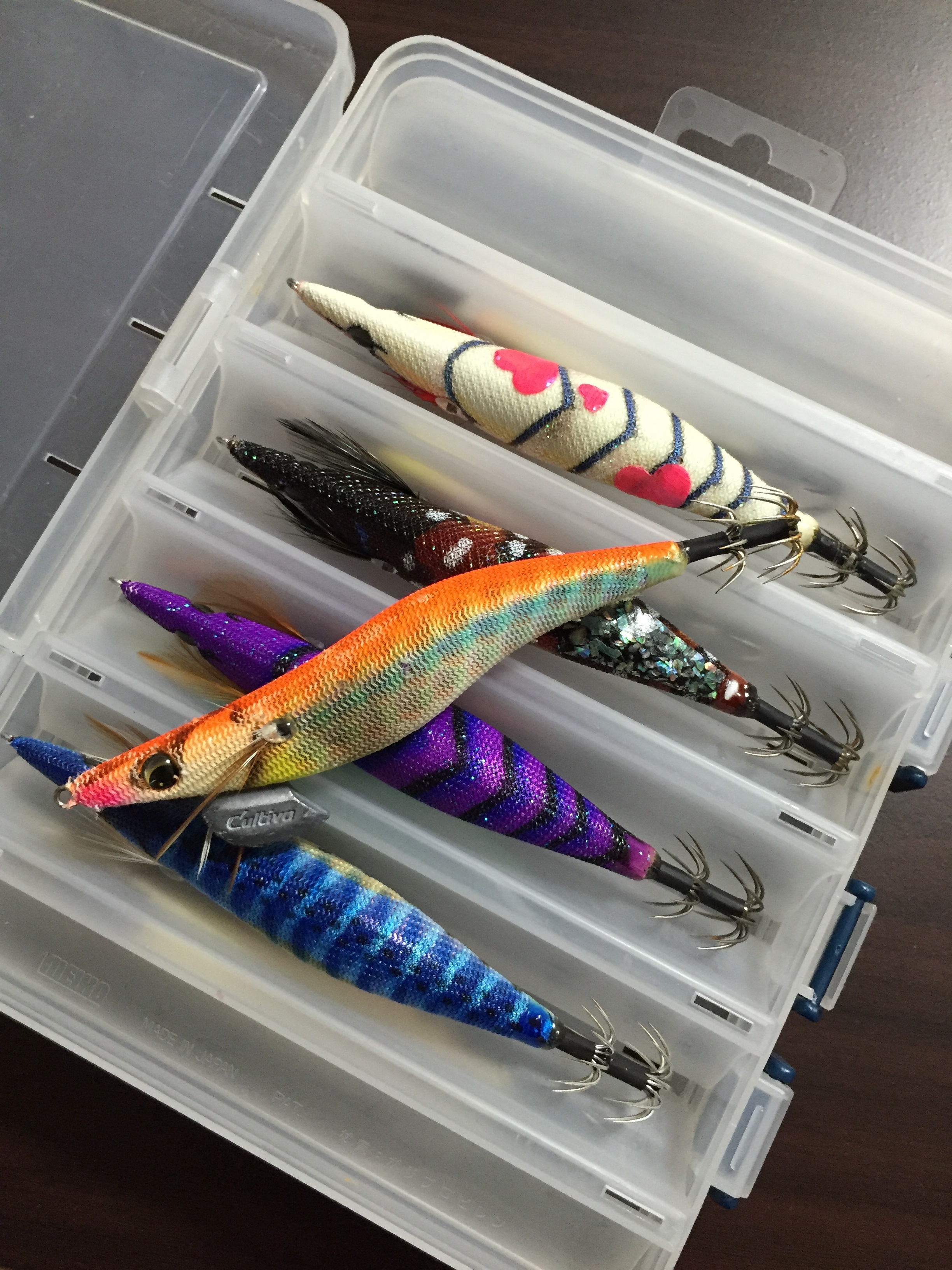
Here’s something I believe is one of the real reasons eging exploded in popularity in Japan: aori squid (bigfin reef squid) is outstandingly good to eat. The small autumn squid — what we call shinko — beat anything you’ll find at a supermarket. That flavour is a big part of why I got hooked on eging in the first place.
So if you’re going to catch them, it’s worth learning how to bring them home properly. How you handle a squid in the first few minutes changes its taste and texture dramatically. And here’s the bonus: handled correctly and frozen, aori squid stays tender all year round. It’s an outstanding thing to have in the freezer. (Whether your family agrees about how much freezer space it deserves is between you and them.)
In this article I’ll cover two ways to bring your catch home:
Ikejime — spiking the squid, for sashimi, stir-fries and freezing, and Okizuke — live-marinated squid, a dish only anglers ever get to eat.
Method 1: Spike it and take it home (ikejime)
This is the standard approach. Sashimi, stir-fried squid, grilled squid, freezing for later — almost everything works if you bring the squid home this way.
What you’ll need: a squid spike (ikejime tool), a cooler box, ice (freeze water in a 500ml plastic bottle — it keeps the inside of your cooler dry), and a zip-lock bag (this is what stops your cooler smelling of squid forever).
Step 1: Spike the squid
Once the squid is landed, handle it as little as possible and spike it while it’s still lively. The target is the point between the eyes. It may feel a little brutal the first time, but commit to it — a clean, instant spike is both the kindest and the best thing you can do for the meat. The photo is a bit hard to read, but you’re aiming for the area inside the red circle.
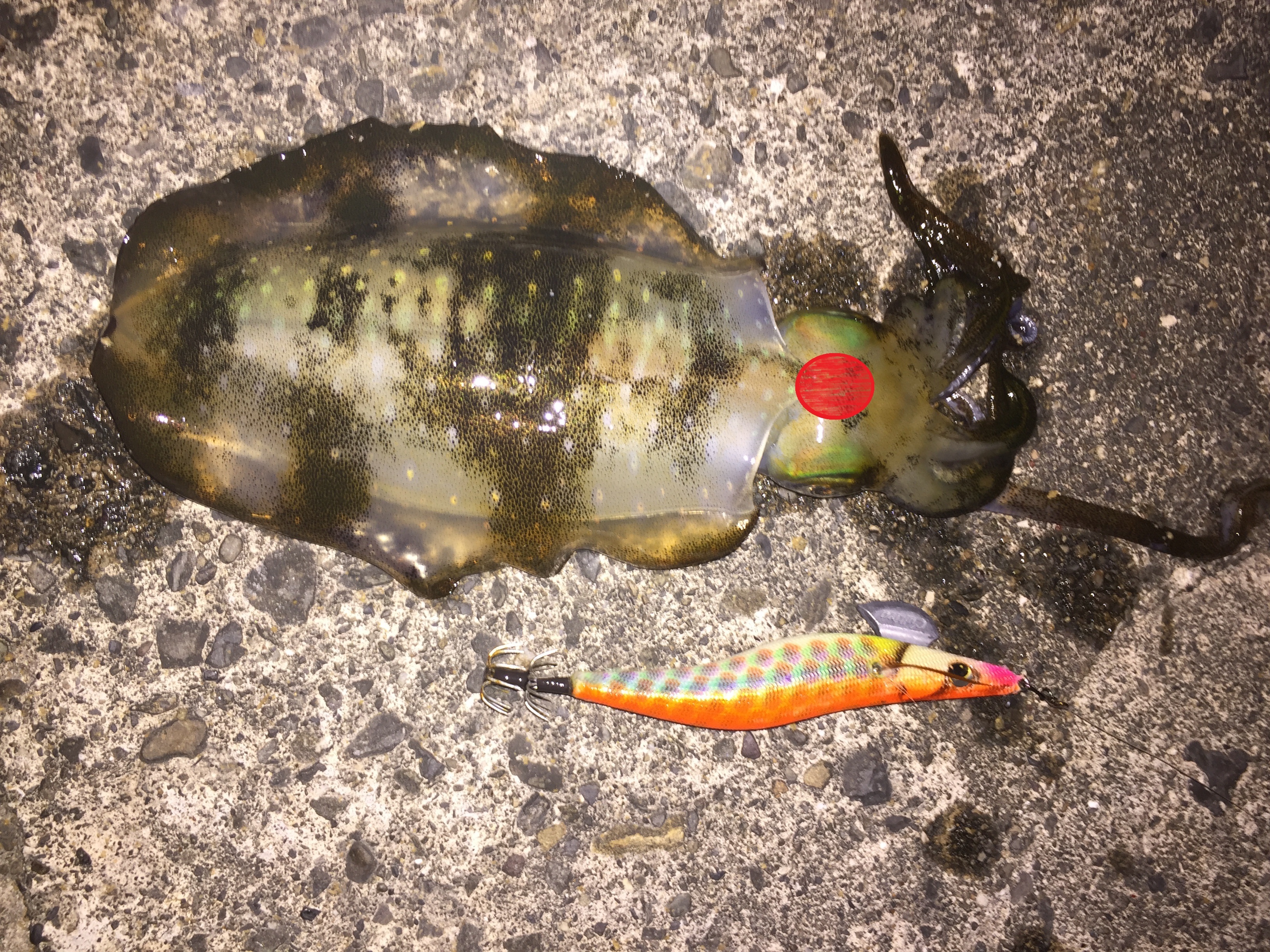
You’ll see the squid turn transparent. That colour change is your confirmation that it’s done. If only one half goes clear, shift your position slightly and spike again.
Step 2: Store it cold
Put the squid into the zip-lock bag you brought. Again, try not to touch it with your hands — hook it with the barbs of your egi and lift it in that way, and your hands stay clean. Seal the bag properly and lay it in the iced cooler. That’s genuinely all you need to do at the water’s edge.
Don’t substitute a normal plastic bag here. Squid liquid leaks out, and you’ll pay for it later when you’re scrubbing the cooler.
Method 2: Okizuke — live-marinated squid
Okizuke is the angler’s private reward. You won’t find it in supermarkets, so most people never get to try it. It’s superb, and it’s worth doing at least once.
Step 1: Make the marinade before you leave home
This is just my version — try it once and adjust to your own taste.
Okizuke marinade
mentsuyu (Japanese noodle soup base) : soy sauce : sake = 3 : 1 : 1
Mix those together, then grate in a knob of fresh ginger. That’s it. Pour it into a plastic bottle and take it with you. I usually bring two 500ml bottles.
Note for readers outside Japan: mentsuyu is a concentrated dashi-and-soy base, sold at Japanese and most Asian grocers. If you can’t find it, a dashi stock with soy sauce and a little mirin will get you close.
Step 2: Catch a squid
Okizuke needs a living squid. So you’ll have to go and catch one. Making the marinade takes five minutes — this step is the actual difficulty.
Step 3: Marinate it alive
This part may strike you as harsh, and I want to be straight about it: the squid must go in alive. That’s what the dish is.
Pour the marinade into a zip-lock bag and warm it in your hands for a moment. Straight out of a cold bottle it’s too cold, and the squid dies immediately. Once it’s slightly warmed, drop the live squid in. Be ready — squid often ink in surprise at this point.
The squid then breathes in the marinade, and that’s how the flavour penetrates all the way through. So leave the bag open, out of the cooler, for about 20 minutes. If you seal it and chill it straight away, the squid dies before it has taken up much marinade.
After 20 minutes or so, seal the bag and put it in the cooler. It’s ready about 12 hours later. If you get home before then, move it to the fridge.
Eat it as it is, or fry it in sesame oil with sliced garlic. Both are excellent. One rule if you’re frying it: peel the skin off the squid first. Always.
A note on eating squid raw
Squid can carry Anisakis, a parasite found in a lot of wild seafood. It’s easy to deal with, but worth knowing about if you’re new to eating your own catch raw.
The standard precaution is to freeze the squid before serving it raw — around −20°C for at least 24 hours will do it. Freezing doesn’t hurt aori squid at all; if anything it tends to come out more tender. Cooking thoroughly also removes the risk. Marinating in soy sauce does not, so the same advice applies to okizuke.
Bringing aori squid home: the short version
There are two good ways to bring your squid home (I’m sure there are others). Spike it immediately, or turn it into okizuke. I can’t choose between them — and on a good day you don’t have to.
Catching well and eating well is what makes eging worth doing. And when friends taste what you brought home, you tend to end up with more people to fish with, which makes the whole thing better again. For me, the pleasure of fishing is choosing the gear, making the plan, catching the fish, and eating it — all of it together.
Ready to go and find some squid? Have a look at the spots here