Once you’ve sorted out your gear and you understand what to actually do on the water to catch aori squid, the next step is deciding “when” and “where” to go before you head out for a session. You can enjoy eging almost anywhere with a rocky or harbour coastline, but the truth is that your catch rate changes dramatically depending on the day and the spot you pick.
Doing a little homework in advance to choose your day and location gets you one step closer to landing squid.
This article is aimed at people who can only fish a few days a month. If you can get out often, then simply fishing again and again will of course raise your odds — but for the rest of us, planning matters.
Choosing the season
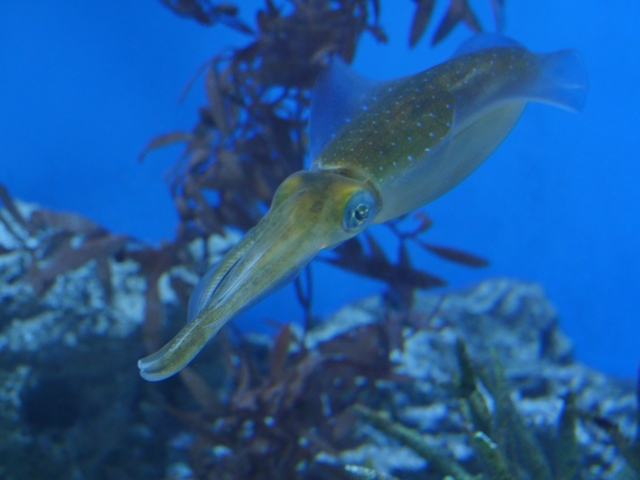
Aori squid have seasons when they bite well and seasons when they don’t. A lot depends on that year’s water temperature and the previous year’s spawning, but as a general rule…
Around the rainy season (late spring / early summer): squid born the previous year, and the year before, move into shallow weedy areas to spawn. These are big fish that pull hard and are great fun as a game target, but the meat is a little tough and not very sweet, so they don’t eat as well. Depending on the region this roughly falls in late April to mid-June.
Late summer into early winter: the squid born that same year have grown and come close to shore to feed. This is heavily influenced by that year’s spawning and water temperature, but in a typical year it runs from about mid-September to early December. The young-of-the-year squid are tender and, because they’re feeding hard, they’re sweet and delicious. Landed sizes range from about 150 g to 800 g, but there are lots of them and they’re eating aggressively, so they bite well — and now and then you’ll hook an aori over a kilo, which is a real thrill. (It’s great fun, but so that we can all keep enjoying eging for years to come, release the small ones and tell them to “come back bigger.” Squid tire easily, so when you release them, avoid touching them with your hands — hold the egi and flip the squid upside down and it comes off easily. Unhook it as close to the water as you can, roughly horizontal to the surface, and it’ll swim off strong.)
So those are the broad seasons. For that reason, a great time to start eging is the stretch when the young-of-the-year have grown to a decent size — roughly late September to early November — when numbers are good and the bites come through clearly.
Choosing the day
Since you’re making the effort to go fishing, it’s more fun to pick a day when aori squid tend to bite well. Personally I enjoy fishing even on a blank day, turning things over in my head — but of course, catching is better.
This is true of fishing in general: the fishing is usually better on days when the tide moves well. (There are certainly some targets that fish better on slack tides, but as a rule…) If “the tide moves” doesn’t mean much to you, here’s the short version. Seawater is pulled by the moon and the sun, and how hard it’s pulled changes over roughly two cycles per month. (This is the same “spring tide” you hear about when a typhoon lines up with one.) New moon and full moon are spring tides. The few days around the first-quarter and last-quarter moons are neap tides.
On a spring tide the difference between high and low water is large, so a lot of water moves that day.
On a neap tide, by contrast, the water barely moves.
Aori squid aren’t unusual here — plenty of sea creatures prefer days when the tide runs well — so it’s a good idea to build your schedule around days close to the spring tide. With aori specifically, it’s not just spring versus neap: of the two spring tides each month, they’re traditionally said to favour the full-moon spring tide. That said, you can also get explosive fishing on a new-moon spring tide. Because it changes how you choose egi colour and size, the full-moon spring tide is the easy recommendation — the squid are more active and you don’t have to fuss over colour as much. Personally I prefer the new moon, since full-moon spring tides draw a lot of other eging anglers…
Tides vary a great deal from region to region, so check a tide table for your area. A good English-language option is Tides4fishing (tides4fishing.com), or search a tide table for your local port.
Reading the tide table
Once you’ve checked the tide table, it pays to work out which hours are your prime window — it gives your session some rhythm and makes it more enjoyable (eat your meal around slack water, that sort of thing). It depends on the spot, but the tide runs hardest when — to put it precisely — the slope of the tide-table curve is steepest. Intuitively, that’s the stretch where the graph is climbing sharply upward or dropping sharply downward. Those are the hours that tend to fish best, so plan to be casting then. Whether the ebb or the flood fishes better varies by location, but personally I feel the window from just after high water down toward low water is the easiest one to target.
Planning where to go
It depends where you live, but once you think about aori squid behaviour, good spots are surprisingly easy to find.
Aori squid behaviour that matters for fishing
They dislike murky water
Like most squid, aori have excellent eyesight and hunt by sight, tracking prey visually before they strike. Avoid fishing places where muddy water pours out of a river mouth after heavy rain, or bottoms with mud that stir up and go murky as soon as there’s some swell — at least during the times they’re actually clouding up.
They eat baitfish
Aori squid eat small baitfish, so they bite well where baitfish gather. There are plenty of such places: the ends of breakwaters, the slack water around a breakwater’s bend, break lines, near tetrapods, and around night lights where plankton — and therefore bait — collect.
Water that’s too cold kills them
Aori squid are said to start dying off — roughly half the population — once the water drops below about 15°C. On the high side, they’re said to die at around 32–33°C, but you rarely see water that warm around the Japanese coast, so in practice it’s the cold that matters. They also dislike rapid swings in temperature, so stable water is better — this is thought to be part of why eging is so productive along warm-current (Kuroshio) coasts.
They can’t stay long in brackish water
Because of osmotic pressure, spending too long in low-salinity water lets too much water into their bodies and they can’t maintain vital function. This is the reason for the well-known saying that “squid hate freshened water” (the drop in salinity you get the day after heavy rain). But that doesn’t mean squid vanish everywhere — they move offshore or into deeper water where the freshening has less effect (seawater is denser than fresh water, so it sits lower), or into depths and spots that stay saltier depending on weather and river flow. Finding those deeper areas, or depths that escape the freshening, from shore is one useful tactic. This doesn’t mean river mouths are automatically bad, either: river mouths hold lots of bait — a real plus for aori — so if you pick a depth or spot with less fresh water in the mix, a river mouth can produce red-hot fishing. The mouth of the Tonda River in southern Wakayama, and the river mouth by Susami port, are exactly this kind of place — famous spots, but miss the right area or depth and you can blank completely.
→ I’ve written up freshened water, murky tides and eging in more detail — take a look here.
Choosing your eging spot and day — summary
Aori squid have fairly readable habits, and it’s best to build them into a plan and fish safe harbours. Finding those spots takes some effort, but:
・For a night session, head to an easy harbour with night lights.
・For a daytime session, go to a harbour with good tidal flow, or an easy stretch of rocky shore.
・On days with big swell on the open coast, the sea goes murky, so pick a harbour that stays clear and is safe.
・If it rained the day before or two days before, choose a spot with depth, well away from any river mouth.
Thinking it through like this to decide where to go is part of the fun of eging.
This blog also introduces fishing spots, so feel free to browse them below.
To see the fishing-spot map, click here.