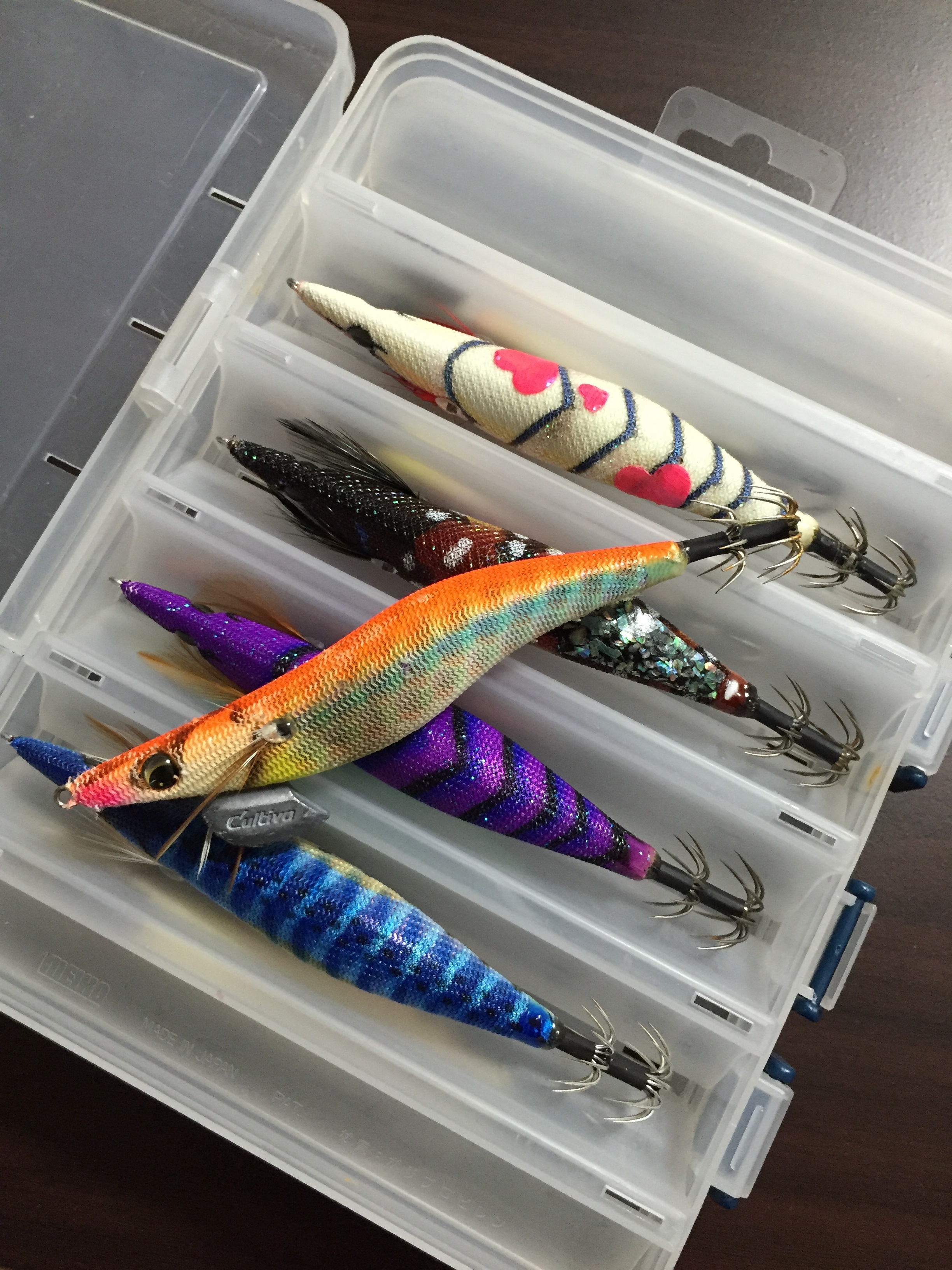
Once you’ve got the four essentials, you can go eging. But “can go” and “going well” are different things — bringing your squid home in good condition, and staying safe on the rocks, both take a little more than the basics.
Eging is booming in Japan right now, and gear development has boomed along with it. New tackle appears in the shops constantly. Below are the pieces I actually rate: things that improve your catch rate, things that get your squid home tasting good, and things that simply make a long session more comfortable.
- Cooler box — for getting your squid home in good condition
- Headlamp — essential if you fish at night
- Line cutter — makes rigging up much smoother
- Landing net or gaff — for when a big one turns up
- Polarised sunglasses
- Squid spike (ikejime tool)
- Gloves
- Hook keeper
- Rock shoes
- Magnet releaser
- Useful eging gear: the short version
Cooler box — for getting your squid home in good condition

This keeps your squid fresh and carries your food and drink to the mark. If you intend to eat what you catch, it isn’t optional. It doesn’t have to be a fishing-specific model — whatever cooler you already own will do the job.
Because eging means walking with your gear, smaller is better. Around 10 litres or less is the sweet spot. Look for one shaped to take a 500ml bottle upright: you can freeze water in an empty bottle to use as your ice, keep a drink in there, and still have room for squid.
One habit worth forming — bag the squid in a zip-lock before it goes in the cooler. Otherwise you’ll be scrubbing squid ink out of the corners later.
Headlamp — essential if you fish at night

Squid fishing tends to be better after dark than during daylight, so most of your sessions will run into the night. A light is close to mandatory — but here’s the catch: squid have excellent eyesight, and leaving a light burning over the water makes them wary.
So go for a headlamp rather than a handheld or lantern type, and get into the habit of switching it off the moment you’re done with it. A headlamp also leaves both hands free, which matters when you’re working a rod all night. Chest-mounted lights get in the way of the casting and jerking motion, so I’d avoid those for eging specifically.
One more use for a light: many egi carry glow paint, and shining a lamp on the lure for a few seconds charges it so it glows in the water. I don’t lean on this much myself, but it does help squid find the lure, and some anglers swear by it.
Line cutter — makes rigging up much smoother

Essentially a pair of scissors for line. You could just carry scissors, but a proper line cutter is easier to wear on your person and safer, because the blades don’t face outward. They’re cheap — a couple of dollars will get you a usable one, and even a basic pair of nail clippers works in a pinch.
Since you’ll reach for it constantly, clip it to a retractable lanyard like the one in the photo. It’s there the instant you want it, and it springs back out of the way.
One caveat: PE braid frays badly when you cut it this way. For braid, a heat cutter gives a much cleaner finish.
Landing net or gaff — for when a big one turns up
(Landing net)

(Gaff — the type that fits onto the same handle as above)


Both of these are tools for getting a hooked squid up to where you’re standing. The handles extend, typically to somewhere between 3 and 8 metres (roughly 10 to 26 feet). A net scoops; a gaff hooks the squid on a point at the tip.
Aori squid around Japan usually run from about 150g to 3kg (5oz to around 6.5lb) — though I once watched someone land a fish close to 4kg (nearly 9lb) off Tokunoshima. Past about 700g (1.5lb), you simply cannot lift one from the water up onto a breakwater or rock ledge on rod power alone.
Snapping a rod is a miserable way to end a session, so carry one or the other. A net is bulkier, which is why I usually hang a gaff off my waist or back — it’s out of the way until the moment it isn’t.
Polarised sunglasses

These cut the glare bouncing off the surface while letting through the light coming up from below. In plain terms, you can see into the water dramatically better. This isn’t a marginal, psychological difference — it’s genuinely transformative.
One of the great pleasures of eging is sight fishing: spotting a squid and working the lure to it. You can’t do it without polarised lenses. Note that these are not the same thing as ordinary UV sunglasses, so buy them from a tackle shop rather than a fashion retailer.
Lens colour does make a real difference, but I wouldn’t overthink it on your first pair. One practical tip: walking any distance in polarised lenses can leave you unsteady on your feet, so I usually take mine off while moving between marks. Buy a pair that comes with a case.
There’s a second reason to wear them for eging specifically: your line becomes far easier to see. Much of eging is watching the PE braid for the tell-tale movement of a take, so this matters more here than in most styles of fishing.
Squid spike (ikejime tool)

A tool for dispatching squid cleanly.
A knife will do the job, but it tends to tear the squid. A purpose-made spike doesn’t.
Drive it in exactly between the eyes and the squid turns transparent. That colour change is your confirmation. Spike both the body and the head section until each has gone clear — the difference in tenderness and freshness on the plate is substantial.
Aori squid are seriously muscular, and if you chill one without spiking it first, it seizes up rock-hard by the time you eat it. Spike it properly and freeze it solid, though, and you can grill that same squid six months later and it will still be tender.
If you want the full method — including okizuke, the live-marinated dish only anglers get to eat — I’ve written it up here: Bringing Aori Squid Home
Gloves

These aren’t really about warmth. Fishing gloves are there to protect your hands and improve your grip (some do insulate as well, but that’s a bonus rather than the point).
They’re not essential. But a full day of eging means constantly working the rod, and your grip strength drains away. With gloves on, you can work the rod without squeezing so hard, and the whole day gets easier. Once you progress to sharper, more aggressive jerking, they also save the outside edge of your little finger from rubbing raw.
When choosing a pair, try them on and judge against two things: can your hands still move freely, and does gripping the rod feel more secure? That’s it.
Hook keeper

A little cover that stops the barbs of your egi catching on your clothes or your car seats. They cost around 20–30 cents each, and they’re better than that price suggests. Fit one over the barbs and the rounded section underneath hooks onto a rod guide, which makes the rod far easier to carry.
This matters in eging because of how the fishing works. We run and gun — fish a spot, move, fish, move — hunting for squid and for the conditions that hold them. With a hook keeper fitted you can put the rod in the car with the egi still tied on, which saves a lot of time over a session.
There are also versions that mount onto the rod blank itself, which serve the same purpose while travelling.
Rock shoes
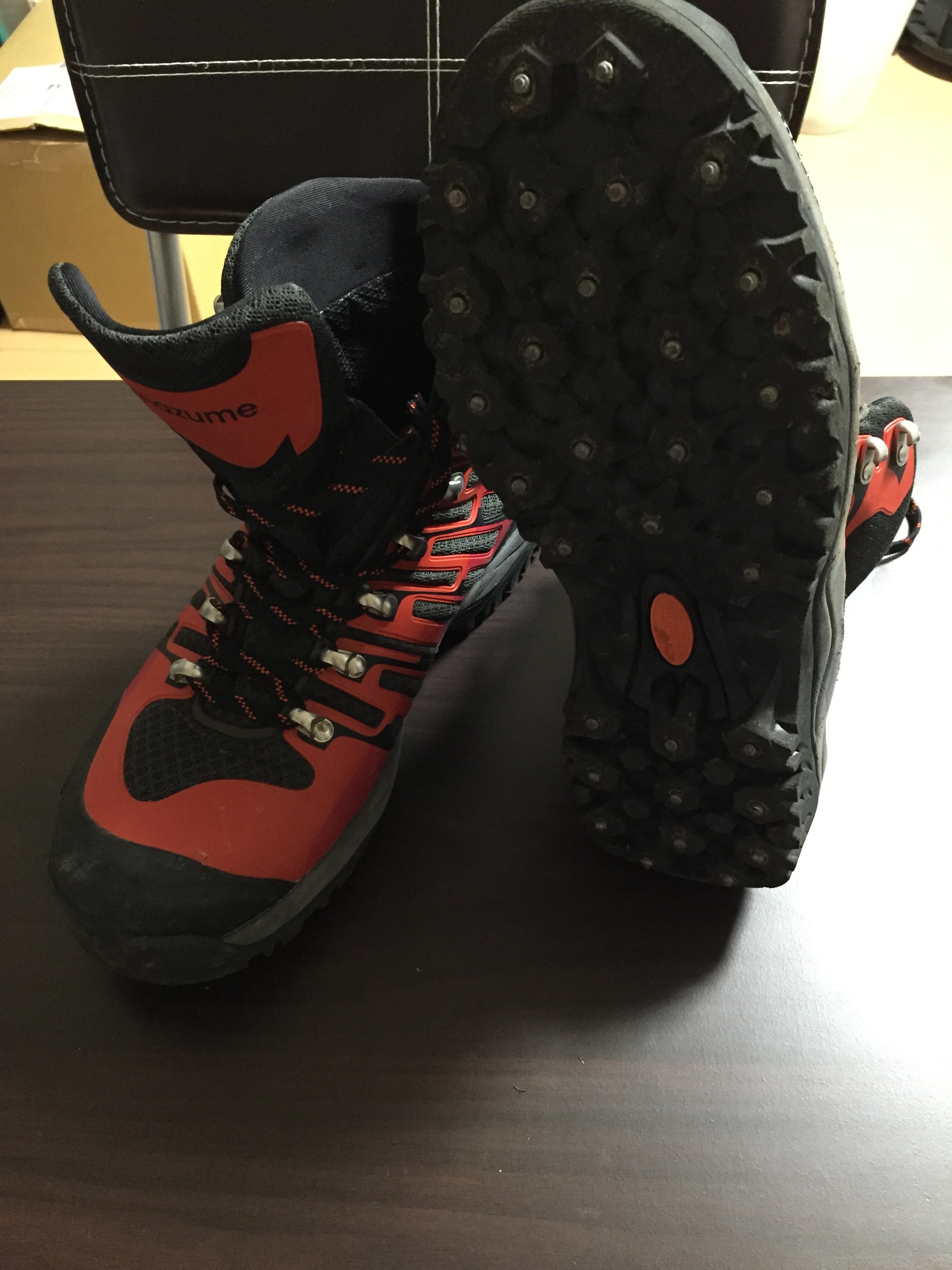
Shoes built for walking on rock ledges.
They come in three broad types: felt, spike, and felt-spike. Which one you want depends on the ground you’ll actually be walking on.
You don’t need these when you’re starting out. But if you want to fish the rocks for bigger squid, they stop being optional. I’d suggest shoe-type over spiked boots — boots get sweaty and uncomfortable over a long session.
Worth checking before you buy: some regions restrict felt soles, mainly under rules aimed at stopping the spread of aquatic organisms between waters. It varies a lot by country and by state, so have a look at what applies where you fish.
Sole choice matters more than most people expect, and it changes depending on where you fish. I’ve broken down studded, felt and felt-spike soles — and where each one wins — here: How to Choose Rock Fishing Shoes
Magnet releaser

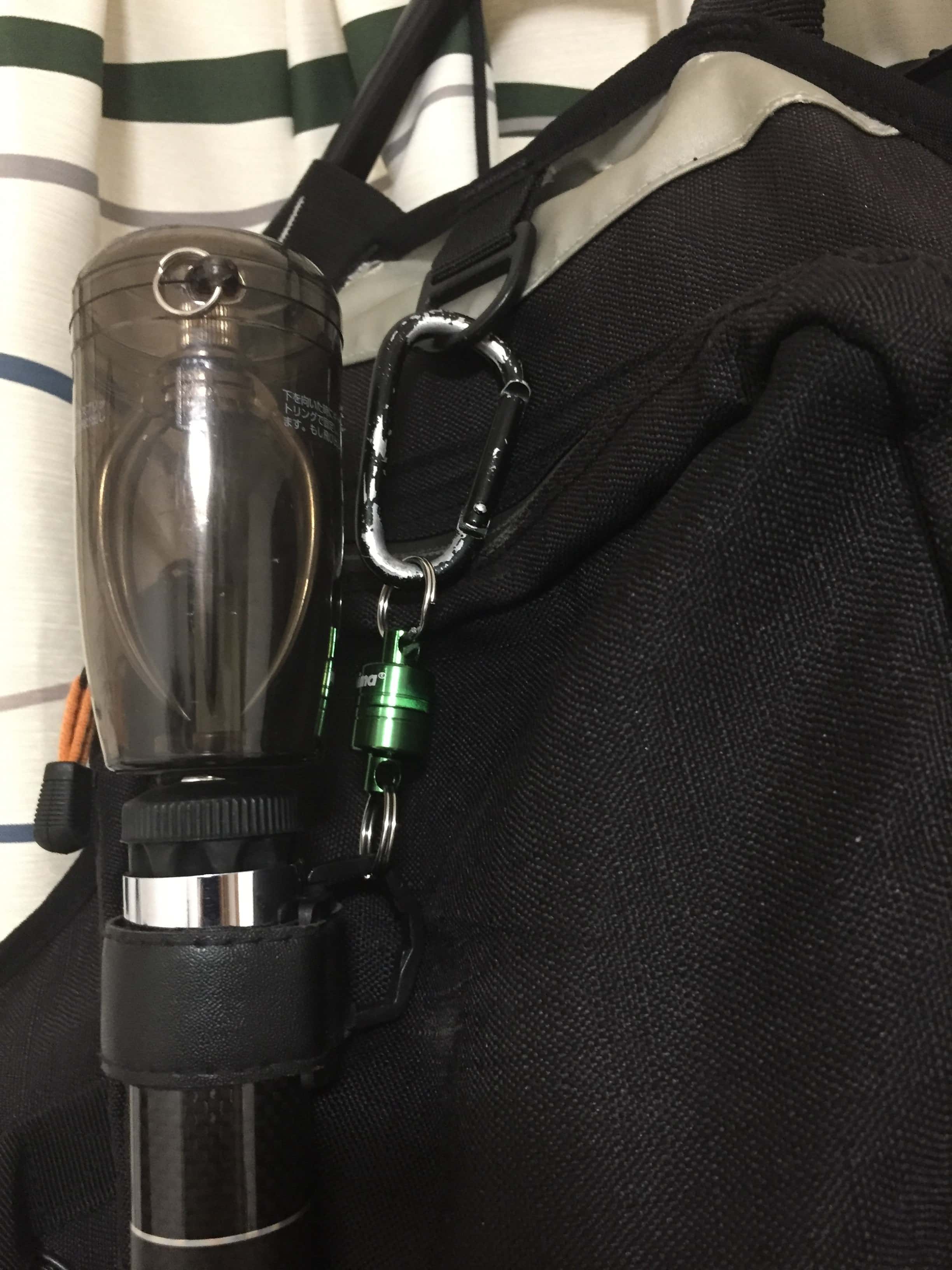
Worth a look if you dislike laying your gaff or net down on the rocks, or find slinging it over your shoulder awkward. The magnet holds the tool on your vest and releases it with a straight pull, so it’s instantly to hand and never in your way.
Useful eging gear: the short version
Beyond rod, reel, line and egi, there’s a lot of gear that makes eging more comfortable and can genuinely lift your catch rate. You don’t need all of it. But some marks make certain items non-negotiable, and if you want to eat what you catch, a few of these are simply essential.
None of it is necessary on day one, so don’t go and buy the lot. Once you’ve fished a few sessions and you know which marks you keep returning to and how you like to fish, come back to this list and pick off what fits your style.
That’s the gear covered. Once you’re kitted out, there are three things worth reading next.
First, knots — if you want to know about the fire knot, which is my pick for eging, it’s here: The Fire Knot for Eging
And once your tackle is sorted, the question becomes when to go and where to stand. Moon phase, tides and squid behaviour all feed into that, and I’ve written it up here: How to Choose Your Eging Day and Spot
And if you’re heading onto the rocks, sort your footwear out before anything else: How to Choose Rock Fishing Shoes


